Sunday, 26 July 2015

A Butterfly's Paradise...and a Challenge Set!

At the edge of our local woods lies a very special little place. It is a place that is probably overlooked by many, but those who take time to notice it will understand why it holds a place in my heart.


The woods are separated from the agricultural fields beyond by two rows of overgrown thickets of brambles, stinging nettles and young ash trees. But between these tangles of vegetation winds a trodden down grassy path, just over a metre in width. In the past couple of months we have found that this clearing provides an incredible habitat for butterflies. So far we have seen Small Skippers, Meadow Browns, Ringlets, Small Whites and Gatekeepers.

Small White

Lazy hazy summer afternoons spent watching the butterflies’ graceful gravity-defying dynamism are magical. The rarity with which you come across another human in the clearing gives the place a tranquil feeling of detachment from the hustle and bustle of modern life. As you wander along the path, with innumerable glistening butterflies gliding just inches from you, you could believe that you had been transported into a fairy tale world.

Meadow Brown

Through watching the butterflies in our patch, I have noticed the fascinating differences in their behaviour. The Small Whites float elegantly between flowers, stopping for some time to feed and warm themselves but the Small Skippers are much faster, only resting briefly and energetically darting throughout the undergrowth. Even only considering those butterflies we have seen in the clearing, there is such a striking variety of colours and patterns to behold, which makes watching them such a joy.

Meadow Brown

While it is wonderful to appreciate the pure beauty of these incredible creatures, it is important to remember that they exist in a delicately balanced ecosystem and are threatened by changes in the management of their habitats. Areas such as this, where butterflies are so abundant, can teach us a great deal about the best ways to create valuable environments which allow them to live and reproduce.

Small Skipper

Many people are aware that certain plants attract butterflies because they provide rich nectar sources, but for butterflies to thrive in an area it is also important that there are sources of food for caterpillars and the right settings for pupation. Different butterflies need different conditions to thrive, which is partly why you will notice that certain areas are abundant with a few species of butterflies, but void of others. Often butterflies are very specialist feeders so in the absence of the flowers that they need to feed, they won’t adapt, they just will not survive. Therefore, the places where multiple butterfly species thrive will contain a range of grasses, shrubs and plants, such as thistles, stinging nettles, nasturtiums, willows and sallows, for caterpillars, and various flowering plants, such as buddleia, marigolds, lavender and dandelions, for adult butterflies.

Gatekeeper

The clearing at the edge of our woods has been managed in a natural way which has allowed wildflowers to thrive. If these plants arrive in people’s gardens, they are usually seen as ‘weeds’ and torn out, but butterflies love them so it would be brilliant if people could at least leave a small section of their garden where they are allowed to grow and bloom. We have turned our small front garden into a mini wildflower patch and planted butterfly friendly plants in the borders of our back garden, and noticed an instant boom in the number of butterflies visiting.

Ringlet
The clearing is teeming with flowering plants such as Rosebay Willowherb (Chamerion angustifolium), Common Ragwort (Senecio jacobaea), Viper’s Bugloss (Echium vulgare), blackberry bushes (Rubus fruticosus) and Creeping Thistle (Cirsium arvense). Without this variety of herbage the butterflies would not show this place so much love.

Small White

Important, also, is the structure of the clearing. Butterflies, as all insects, cannot regulate their body temperature and, therefore, need the sunlight’s warmth to heat them up before they forage. For the butterflies that we regularly see in the clearing, dense woodland would not provide enough access to sunlight to allow them to thrive and, therefore, the clearing offers a welcome sun-trap amongst the dark thickets of trees. It also goes without saying that many of the plants that the butterflies need to succeed rely on good sources of sunlight in order to grow. The fact that the clearing is flanked on both sides by tangles of overgrown foliage and small trees also means that the butterflies have a calm area in which to fly, protected from the wind.

Meadow Brown

Since we discovered the clearing I have been having a great time commandeering Andrew’s camera and eagerly taking photos of these beautiful insects. I have found it so much fun to capture the butterflies on camera that I have set myself a challenge. I’m going to photograph every British butterfly species!

Gatekeeper

Seeing as every butterfly is only around for a certain period each year, this will likely take years to complete. While the likes of Meadow Browns practically offer themselves to be photographed, I think I’m going to have more of a trial ahead trying to locate butterflies which are found only in a small area, such as the Lulworth Skipper and the Mountain Ringlet, or in difficult to see positions, such as the Purple Emperor which mainly flies around tree canopies. Each time I photograph a new species I’m going to post it on the blog to keep you updated. For this article I’ve just embedded the photos throughout the text but here is my list so far:

Local woods
Gatekeeper
Meadow Brown
Ringlet
Small White
Small Skipper

I’ve started with a few of the most common, so wish me luck for the more difficult ones ahead – I can’t wait for the challenge!

Small Skipper

Tuesday, 30 June 2015

Perfect Paxton

Paxton Pits is a reserve where lakes, woodland and meadows provide a rich backdrop for nature’s spectacle. As it flows on just a fraction of its journey from Syresham to the North Sea, the River Great Ouse sweeps its arm around the south and east boundaries of the reserve, like a protective guardian.


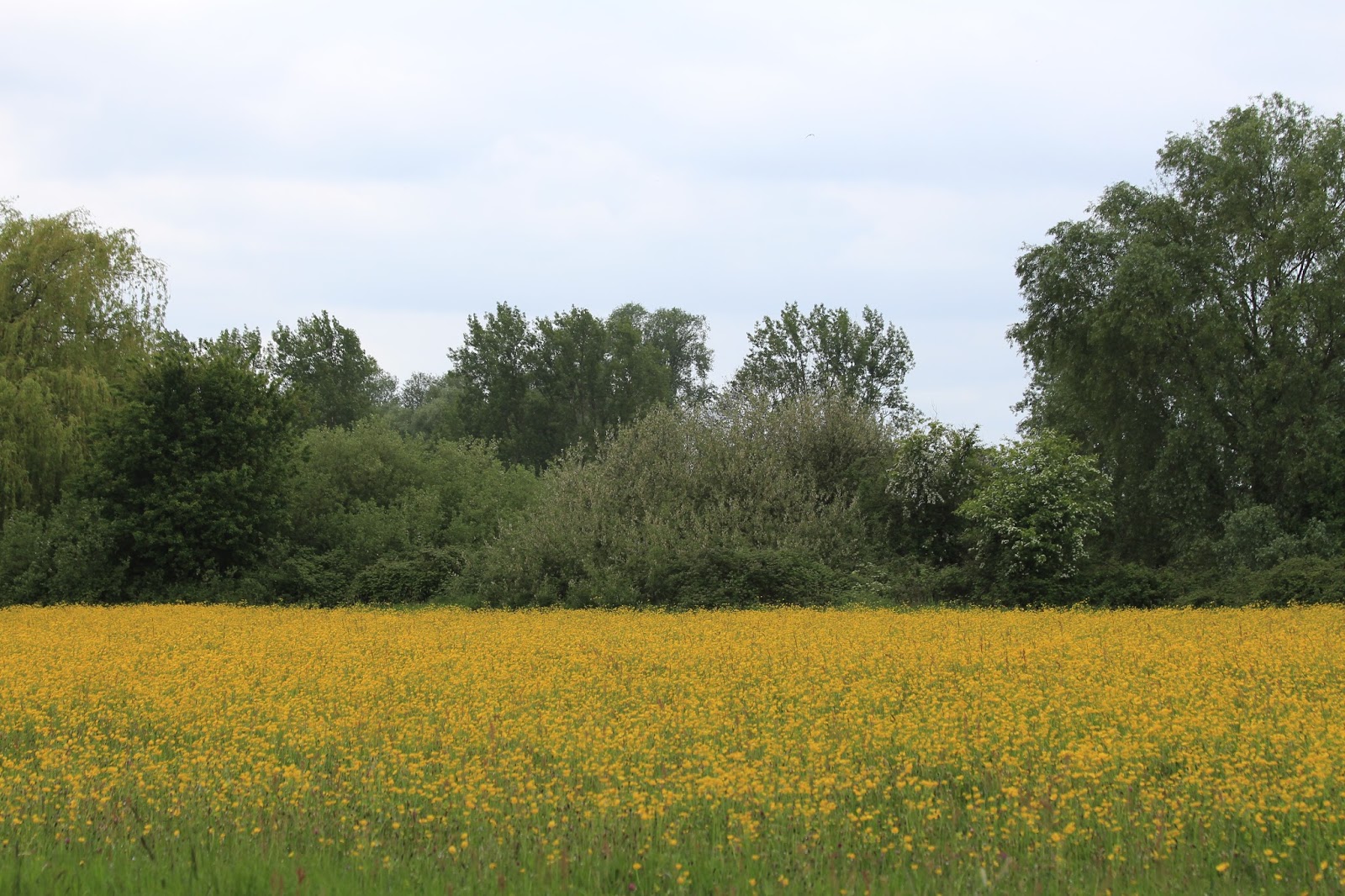
On a seasonably sunny Sunday in late June, we had only wandered a minute or so from the visitors’ centre when we were greeted by a vibrant meadow dancing with golden buttercups. At this time of year, scatterings of assorted wildflowers and floral bushes adorn the paths, and blushing dog-roses overhang yellow irises which sit proudly amongst wild grasses.


The lakes provide a great opportunity to spy on all manner of water birds such as great-crested grebes, herons and little egrets. From the Hayden Hide, a small island is visible on which cormorants gather in their pterodactyl-like glory. They stand here with inky outstretched wings, drying off their feathers in between dives. There is also something extraordinary about watching the graceful aerial acrobatics of common terns as they glide over and dip into the water, wildly screeching at each other.


Now that summer has arrived, these rich habitats are buzzing with a wealth of fascinating insects. Lucent azure Common Blue damselflies flutter between reeds like elusive whispers, moving their wings independently and moving us to wonder. Insects often get the reputation of being mundane or unpleasant but I challenge anyone with that attitude to sit and carefully watch an insect going about their business. The longer you watch, the more intricate and fascinating their movements become. Just watching a bee busily foraging for pollen for a few minutes can be an incredibly relaxing experience.


Although more difficult to spot, mammals also have their place at Paxton. I have sat for many happy periods watching the playful escapades of grey squirrels as they eagerly nibble from the feeding tables and competitively chase each other away from the nuts. However, it is not quite so easy to catch sight of the hares, badgers and foxes that are present at Paxton but are by nature elusive. You really would need to be in the right place at the right time to see them. A mammal that I have always wanted to see at Paxton is the otter. There have been many sightings of them over the years, and only a few weeks ago a volunteer told me that one had been seen recently near the moorings, but as of yet I have not been lucky enough to spy one for myself.


A day at Paxton feels like the most delicious escapism, but experiences of nature shouldn’t just be a means of escaping, they should be an integral part of our lives. We should appreciate the beauty of nature every day and relish those moments of intimacy with wildlife that really make us feel alive. We need to stop and appreciate the awe-inspiring palette of a sunrise, the effortless grace of a butterfly and the sheer breathtaking ruggedness of a limestone cliff. Most of all we need to stop taking these things for granted by assuming that nature will always be there for us even if we’re not there for it. Whatever it is that drives us in our moments of stress, we need to remember what really matters. Many things that we worry about are mere human constructs, but fighting for nature provides us with a goal that transcends the transience of money and reputation. After all, nature is the only real thing we have. And doesn’t that make it worth fighting for?


Saturday, 20 June 2015

Wood Antics

Dead leaves twitching, dry wood cracking, and the rustling of hundreds of thousands of tiny feet on the dusty earth. As we wandered through the forest, the delicate rustic sounds of the wood ants’ nest pattered through the air amongst the lofty conifers. Stumbling upon the sight of the mound, I was struck, as I am every time, by the sheer number of worker ants busily labouring together in pursuit of a common goal – to build their garrison against predators and the elements.

I have always been fascinated by the social structure of these intriguing ants. These clever little creatures belong to the genus Formica. A colony can have one or more queen ants who can live up to 20 years. Only queens and a relatively small number of workers survive the winter, deep underground where the environment is more stable. As spring spreads across the land and the ground grows warmer, the queens respond to the more amenable season and lay their eggs. On these tiny eggs, the future of the colony relies. With careful tending from the industrious female worker ants, these hatch into grubs in the nursery chambers of the nest. Next, through repeatedly moulting their exoskeletons, they grow larger until they are ready to create cocoons for themselves and emerge later as adult ants.

The queen and her males can be distinguished from the workers by their larger size and, during the mating period, the presence of their wings. The males are short-lived and die soon after they have completed their life purpose of mating with the queen. To some this may seem like a miserable existence but they play a crucial role in the continuation of the colony.

The captivating movement of the workers provided a perfect chance for me to practice my wildlife filming. The longer I watched, the more intricate their social interactions appeared. The best way to appreciate these brilliant creatures is to see them, so I decided to put together a short film of my footage with a few fun facts about them thrown in. This is my first attempt at editing my footage with a voiceover, so any feedback is welcome. I hope you enjoy it!


Sunday, 7 June 2015

Wildflower Delights

Now that we are in the midst of wedding planning, we have finally got round to having a proper consultation with a florist. Unexpectedly, it was probably the most fun part of the planning process so far. In the hands of an amateur, flowers are a lovely way to brighten up a room but in the hands of a professional they are truly an art form. As our florist led us through pages of an RHS colour chart and her book containing more flowers than I had ever considered, we realised that the job of choosing flowers was more intricate yet more exciting than we had expected. This led me to think more about the wildflowers which grace our village and, perhaps, get unfairly overlooked.


One of the most delightful perennial flowers I have found in our woodland is Germander Speedwell (Veronica chamaedrys). Now that the bluebells are fading, patches of this pretty little flower continue to paint the woods blue and lilac. They have four dainty rounded petals which surround a white centre which bears a distinctive double stamen. The jagged edges of its ovate leaves look contrastingly rugged. Apart from the woods, you may also see these flowers in meadows and at the side of roads.


Continuing with the same colour scheme, the woods are currently adorned with thick mats of Bugle (Ajuga reptans). This plant has a single erect stem with a rosette of large verdant leaves at its base and smaller rings of leaves intermittently up its stem. Delicately lined deep blue and purple flowers sit in the axils of the stem leaves. This charming perennial stays close to the woodland floor and takes root by spreading out its overground runners.


Another of my favourite wildflowers in our village is the Lesser Celandine (Ranunculus ficaria), a jaunty yellow member of the Buttercup family. This flower, with its 8-12 long splaying petals, is like sunshine in plant-form and effortlessly brightens up even the plainest wood or meadow. Appropriately, I think, its dark green leaves are heart-shaped with wavy edges. These flowers are on their way out at the moment but hopefully you will be able to catch a glimpse before they fade.


It would be impossible for me to do justice to the wealth of wildflowers we have in our village in such a short post, but these are just a few of those that are special to me. Perhaps this week you will take the time to appreciate some of your favourites too.